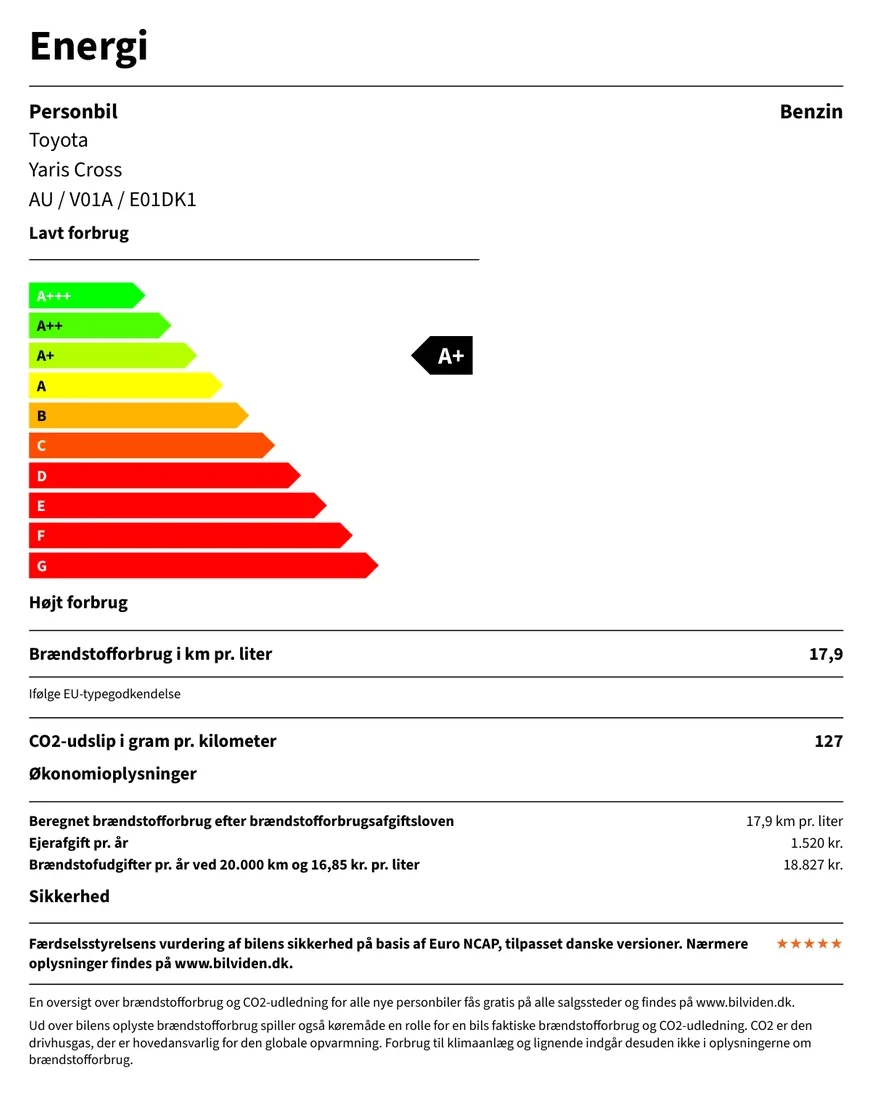
Car dealer compliance in Denmark comes down to four duties for every new car you sell: the energy label (energimærke) of the Danish Road Traffic Authority at the car, the energy class, fuel consumption in km per litre and CO2 in every advert, a sales price that already includes VAT and registration tax, and a representative example as soon as an advert names a rate. The label rules sit in BEK nr. 655/2012 and its 2018 amendment BEK nr. 1625/2018, the price rule in BEK nr. 1696/2017 and the credit rules in section 18 of the Danish Marketing Practices Act (markedsføringsloven). From 20 November 2026 every credit advert in Denmark also carries the warning “Advarsel! Det koster penge at låne penge”. Vehicle Hub holds these rules as the Danish rule set and fills the values from the car itself, so the label in the windscreen, the car page and the exposé tell the same story. Denmark is one of the markets on our car labelling directive by country overview.
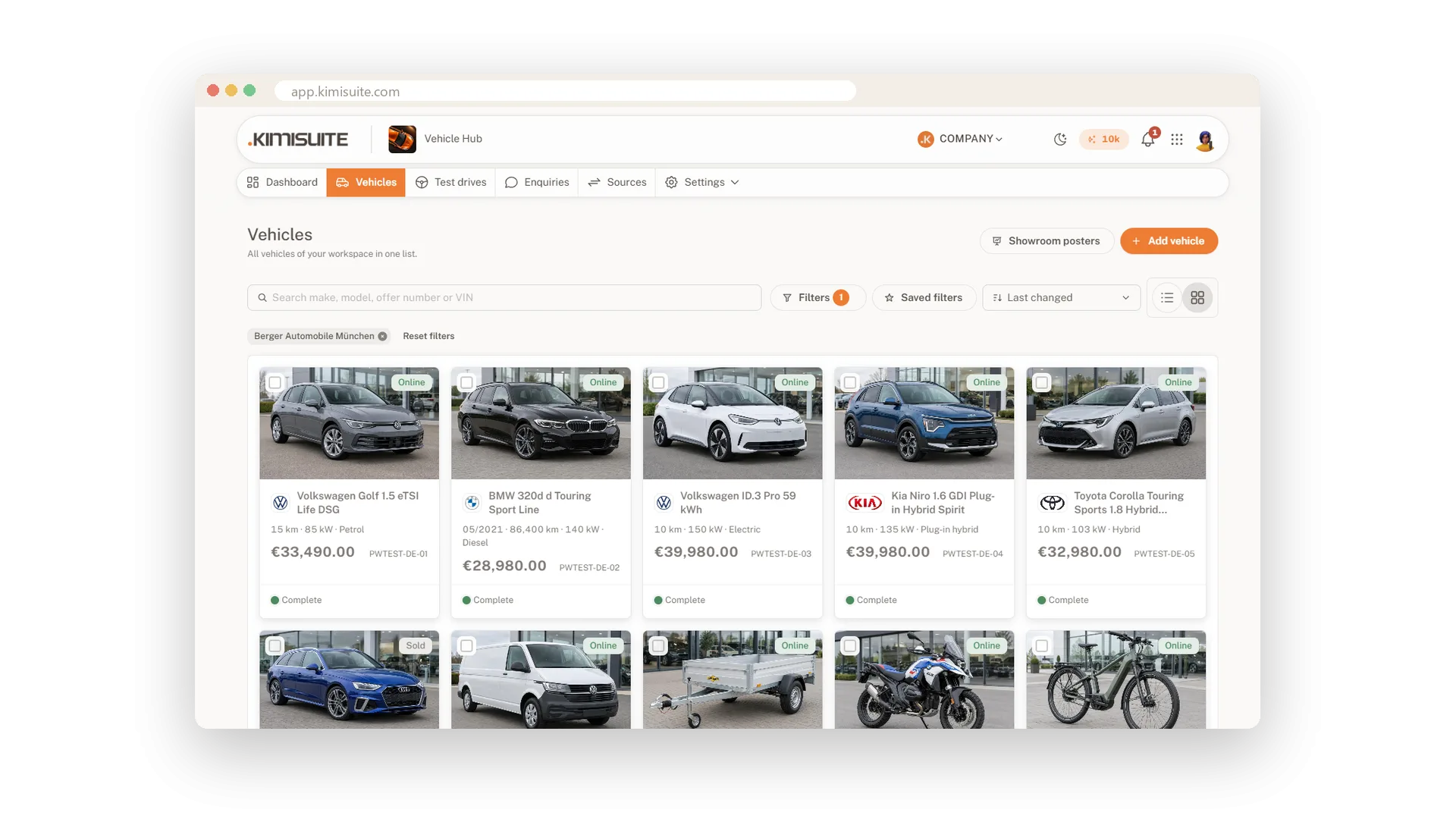
The Danish label is unusual. Classes run from A+++ to G and are measured in kilometres per litre, not in grams of CO2, with one table for petrol and one for diesel. The label also prints the green owner tax (grøn ejerafgift) for a year, the fuel costs at 20,000 km and the authority's quarterly litre price, and the car's Euro NCAP safety rating. Vehicle Hub works most of that out: the owner tax from the CO2 table of the fuel consumption duty act, the fuel costs from the litre price published on bilviden.dk, and the class from the type-approval figure rounded to one decimal. You add the star rating and the type, variant and version from the certificate of conformity. Every mandatory detail also appears on the car's page on your website through the Vehicle Hub widgets. Vehicle Hub applies the rules; it is not legal advice, and your trade association or lawyer answers questions about a specific case.
 BEK nr. 655/2012