The 14 allergens are the food groups that EU and UK food law requires a business to declare when a dish contains them: celery, cereals containing gluten, crustaceans, eggs, fish, lupin, milk, molluscs, mustard, peanuts, sesame, soybeans, sulphur dioxide and sulphites, and tree nuts. The rule covers restaurants, cafes, bakeries and takeaways too, not just packaged food. What differs from country to country is how you are allowed to tell your guests.
This guide explains the list, the ways of showing it on a menu, and a practical routine so the information stays right when your dishes change. It is not legal advice; your local food authority has the final word for your premises.
The 14 allergens, one by one
The UK Food Standards Agency lists them like this (guidance last updated July 17, 2026), and the same 14 groups are named in Annex II of EU Regulation No 1169/2011:
| # | Allergen | Typical examples on a menu |
|---|---|---|
| 1 | Celery | stock, soups, salads, spice mixes |
| 2 | Cereals containing gluten | wheat, rye, barley, oats: bread, pasta, batter, sauces |
| 3 | Crustaceans | prawns, crab, lobster |
| 4 | Eggs | mayonnaise, fresh pasta, desserts, glazes |
| 5 | Fish | fish sauce, anchovies in dressings |
| 6 | Lupin | lupin flour in some breads and pastries |
| 7 | Milk | butter, cream, cheese, many sauces |
| 8 | Molluscs | mussels, oysters, squid |
| 9 | Mustard | dressings, marinades, sauces |
| 10 | Peanuts | satay, oils, desserts |
| 11 | Sesame | seeds, tahini, hummus, oils |
| 12 | Soybeans | soy sauce, tofu, some dressings |
| 13 | Sulphur dioxide and sulphites | wine, dried fruit; declared above 10 parts per million |
| 14 | Tree nuts | almonds, hazelnuts, walnuts, cashews, pecans, pistachios, macadamias |
The rule also applies to additives and processing aids made from these foods. A dish can be "nut-free" in its recipe and still carry a nut oil in the dressing.
Serving guests from the US? The US uses a different list. The FDA names nine major food allergens: milk, eggs, fish, crustacean shellfish, tree nuts, peanuts, wheat, soybeans and sesame (sesame since January 1, 2023). Celery, lupin, mustard, molluscs and sulphites are not on it, so an American guest may not expect you to mark them, but they will still read your markings.
How you can tell guests
The obligation has applied to non-prepacked food, including restaurants and cafes, since Regulation No 1169/2011 entered into application on December 13, 2014. The ways of meeting it are set nationally. Two examples, as of October 2026:
England, Wales and Northern Ireland. The FSA allows full written allergen information on a menu, chalkboard or in an information pack, or verbal information with a clearly visible written notice telling guests how to get it. Its own advice is that written information, supported by a conversation, works best.
Germany. The Lebensmittelinformations-Durchführungsverordnung (LMIDV, § 4) allows the information on a sign, on the menu, as a notice in the premises, or in other written or electronic form, as long as guests can see it before they order. On menus, easy-to-understand footnotes or endnotes are allowed if the dish name points to them clearly. Oral information by informed staff is possible under conditions: a written or electronic record of the ingredients must exist and be available on request, and a clearly visible notice must tell guests that they can ask.
That is why many German menus show small letters or numbers after each dish: the codes point to a legend. Austria, Switzerland and other countries have their own rules; check the version that applies to you.
Three ways to show allergens on a menu
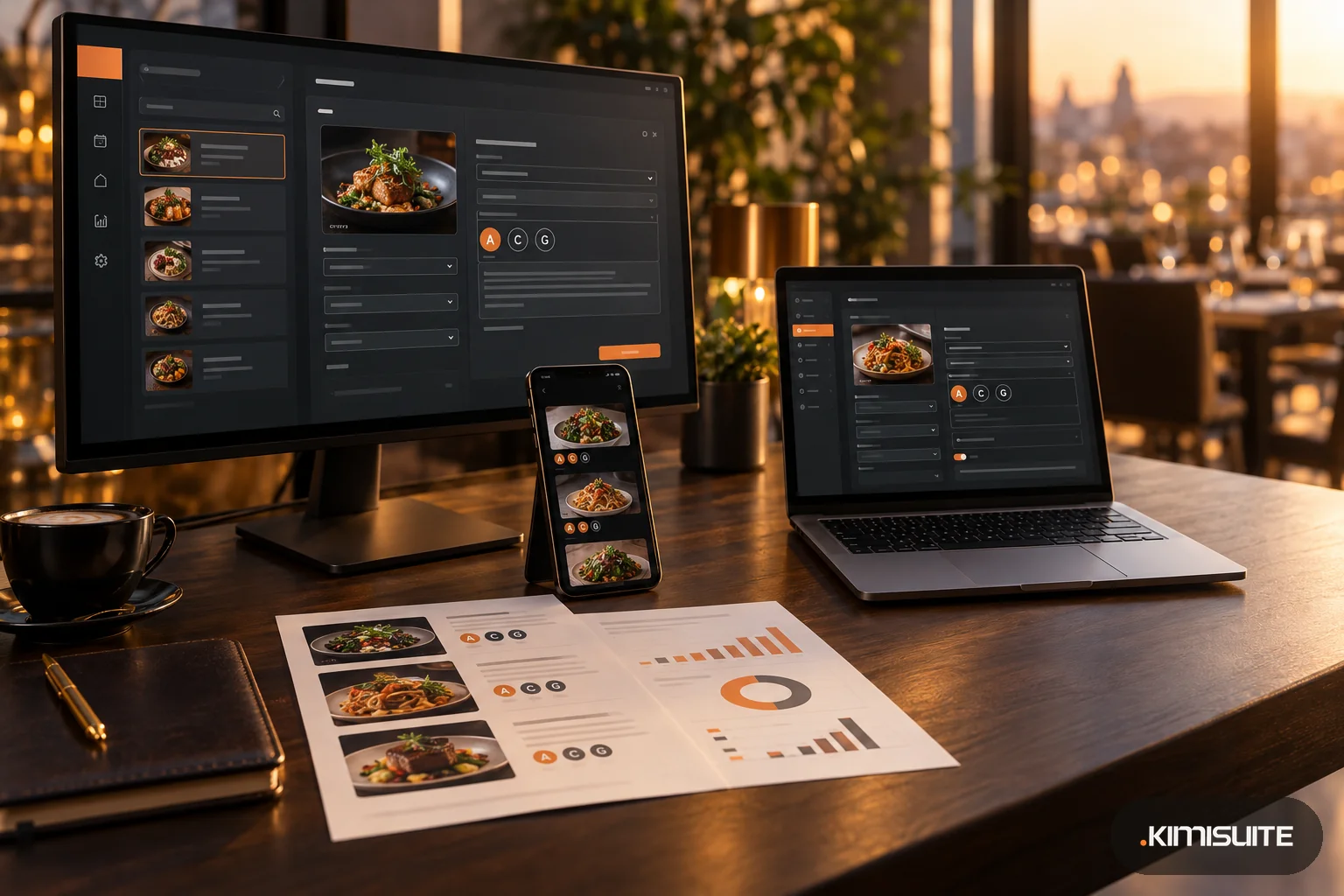
- Codes next to each dish, legend at the bottom. Compact and familiar in German-speaking countries, for example "Spaghetti alla carbonara A, C, G". Works on a printed menu and on a phone. The legend must be easy to find.
- An allergen matrix. A table with dishes in rows and the 14 allergens in columns, kept at the counter or in a folder. The FSA offers allergen templates you can download. Good for staff, less handy for guests at the table.
- Words in the dish description. "Contains milk, eggs and gluten." Clearest for guests, but long menus get crowded, and every translation has to repeat it.
Whatever you pick, keep it the same everywhere: the printed menu, the QR menu, the website and the screen above the counter should never disagree.
A routine that keeps it correct
The legal part is usually not the problem. The problem is that the information drifts:
- Record allergens per dish, not per menu. When a dish moves to another menu, its allergens move with it.
- Re-check when a supplier or recipe changes. A new brand of stock or bread is the most common reason a declaration goes wrong.
- One source for all channels. If the printed menu, the website and the QR menu are edited separately, one of them will be out of date.
- Train new staff on day one. Show them where the matrix or the legend is and who to ask in the kitchen.
- Never guess. If a guest asks something that is not on the record, the answer is "I will check with the kitchen."
Doing it in Restaurant Hub
Restaurant Hub, the menu app in KIMISUITE, comes with the 14 EU allergens and 13 additives preset, with letter codes A to R for allergens and numbers 1 to 13 for additives. You mark them on each dish once, along with food types such as vegetarian, vegan, gluten-free or spicy. You can give the allergen and additive names a translation in every menu language you add, and extend the list with your own entries.
From that single record:
- the digital QR menu shows the codes on each dish and a legend in the menu language the guest picks
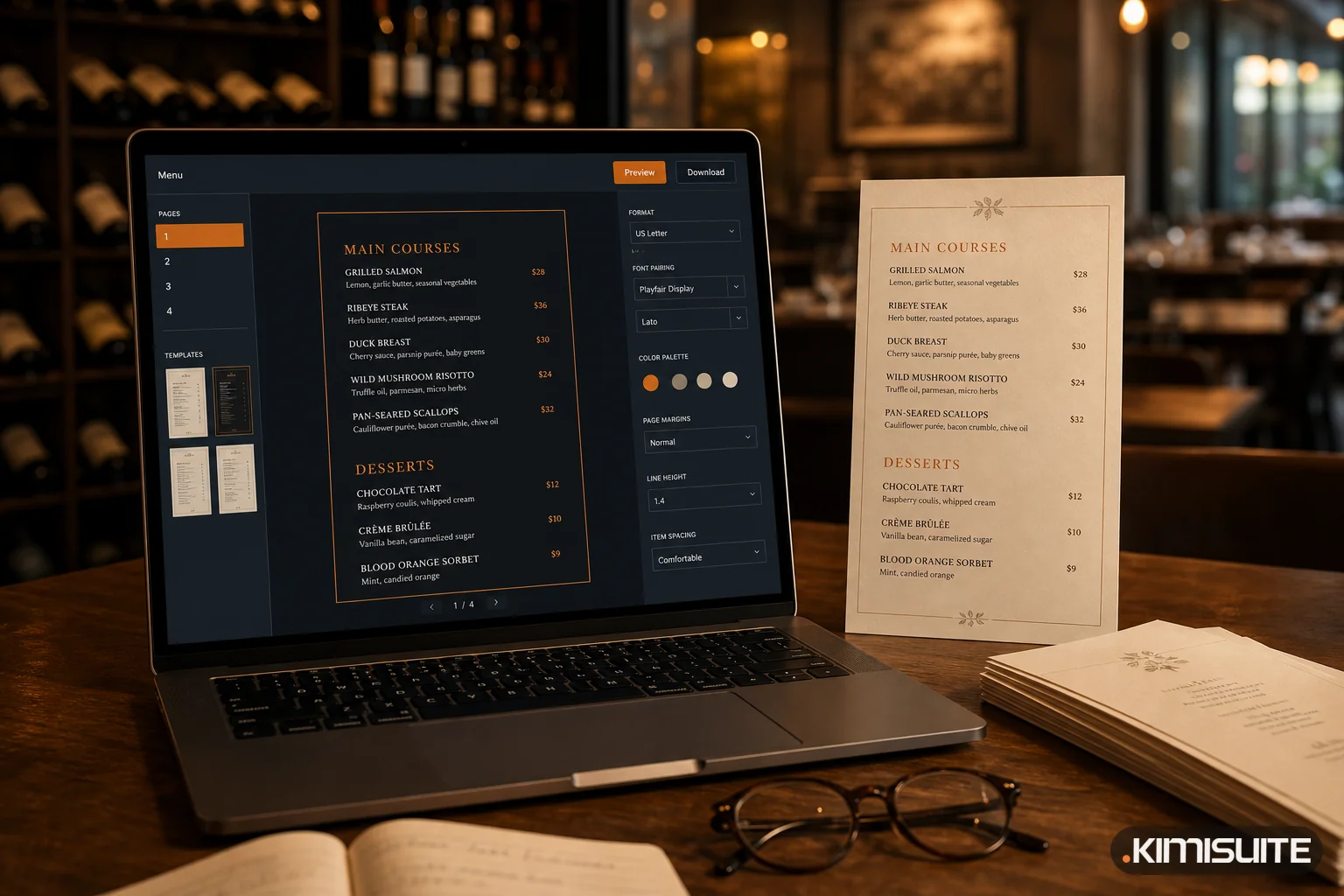
- the printed menu can include the allergen markers when you create the PDF
- the menu widget on your website shows the same codes
Change a recipe, update the dish, and every channel follows. You still have to check the declarations yourself: the software shows what you entered, it does not know your recipes.
Questions at the table still go to your staff and the kitchen, so the routine above stays in place. If your QR code still opens a PDF, read why that makes allergen information hard to find in your QR menu is probably a PDF.