It happens several times a night. A guest points at a dish and asks whether it contains nuts.
The waiter has three options. Answer from memory, which is a guess. Go and ask the kitchen, which takes two minutes during service. Or say they are not sure, which is honest and sounds like the restaurant does not know its own food.
None of those is good, and none of them is the waiter's fault. The information exists — it is written down somewhere. It is just not available at the table, in the moment, to the person being asked.
Why allergen questions are harder than they look
The fourteen EU allergens are declared, on paper, somewhere in the restaurant. That obligation is met. The problem is retrieval.
The knowledge is not evenly spread. The chef knows. The waiter who has worked there four years mostly knows. The one who started on Tuesday does not, and is on the floor tonight.
The dish changes. A supplier switch, a substitution when something runs out, a sauce made differently because the usual one is gone. The declaration on file may be right; the plate tonight may not match it.
Guests ask in categories, not ingredients. They do not ask whether a dish contains a specific additive. They ask whether it is safe for someone with a nut allergy, whether it is vegan, whether there is anything without gluten. Answering means combining several fields, per dish, across the whole menu, from memory.
Nobody asks twice. A guest who gets a vague answer does not escalate. They order something plain, or they stop coming. You never hear about it.
So the practical situation is this: the data is complete and the answer is unavailable. That gap is not a training problem. It is an access problem.
What changes when the menu can answer
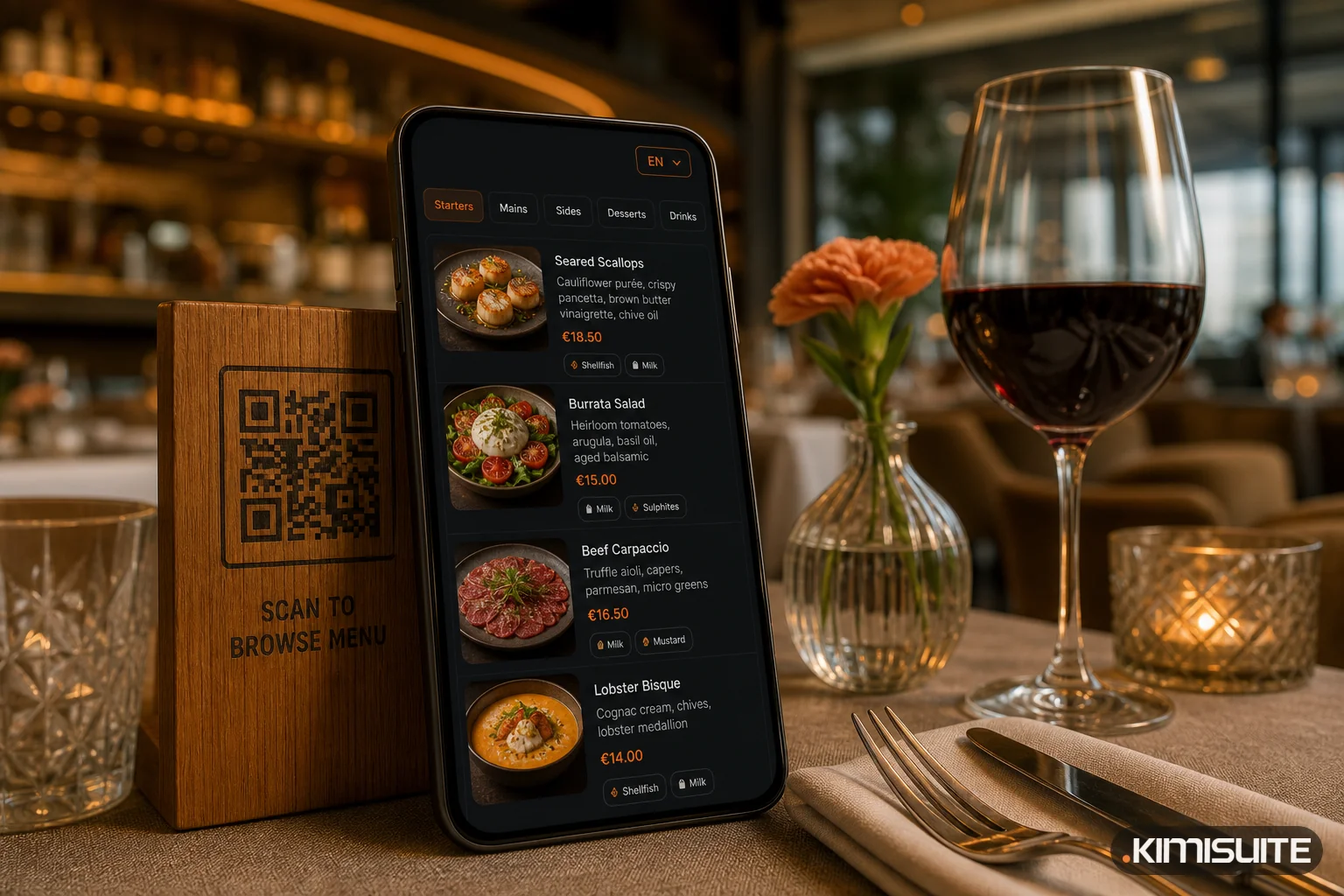
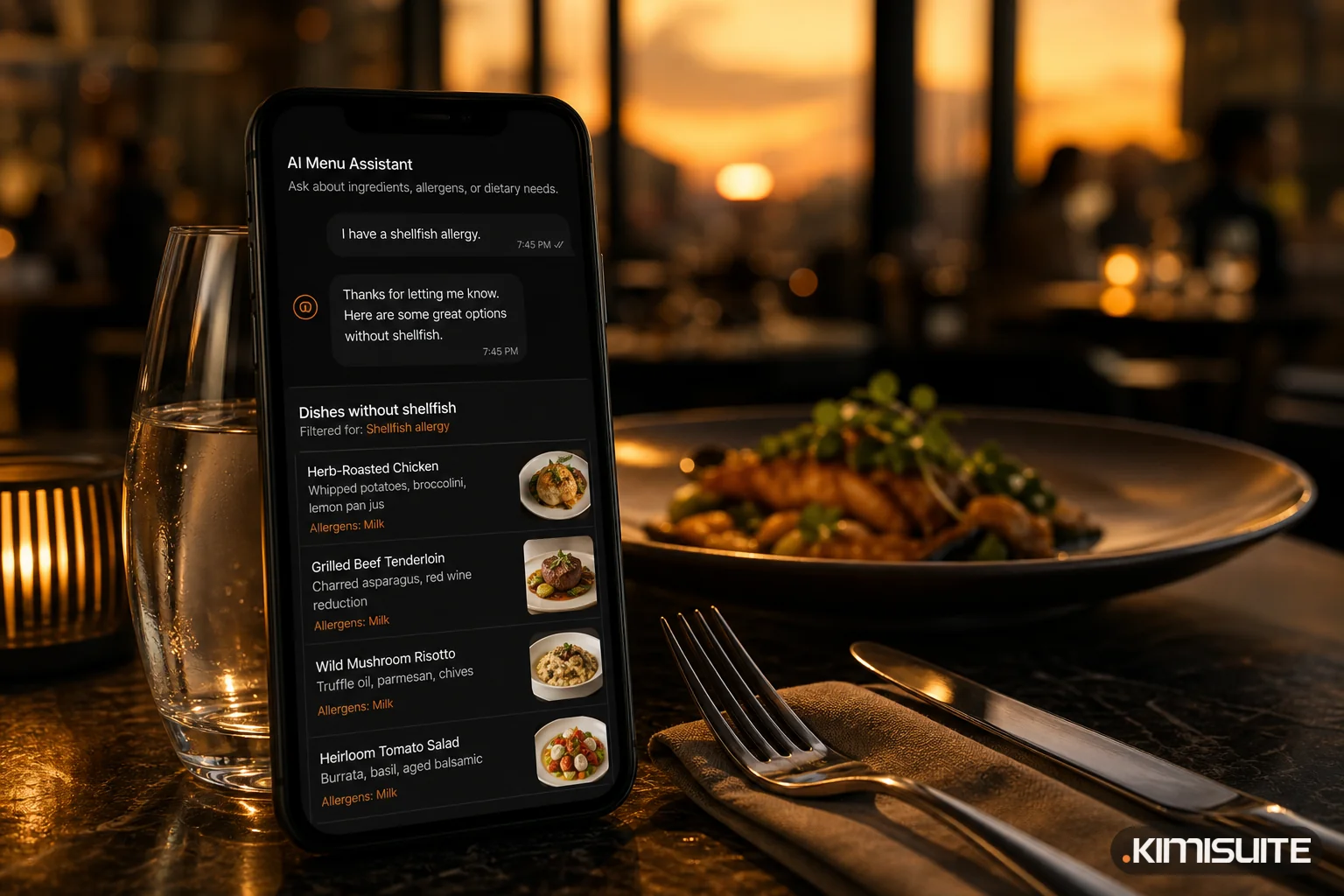
Smart Menu is an AI assistant built into the digital menu. A guest taps it and asks in their own words:
What do you have without nuts?
Show me something vegetarian.
Is anything here gluten free?
Which wine goes well with this dish?
It answers from your menu — your dishes, your descriptions, your ingredients, your allergen and additive declarations, your food types, your prices. Not from general knowledge about restaurants, and not from dishes you do not serve.
That distinction is the whole feature. An assistant that invents a plausible answer about your food is worse than no assistant. One that reads your declarations gives the same answer every time, on every shift, in every language your menu is maintained in.
For the guest, the awkward part of the interaction disappears. They do not have to explain their allergy to a stranger, wait while somebody checks, or feel like an inconvenience. They ask a screen and get a list.
It is only as good as your data
This deserves saying plainly, because it is where the feature succeeds or fails.
Smart Menu reads the allergen and additive markers, the food types and the descriptions on your menu items. If half your dishes have a two-word description and no markers, the answers will be thin — correctly thin, but thin.
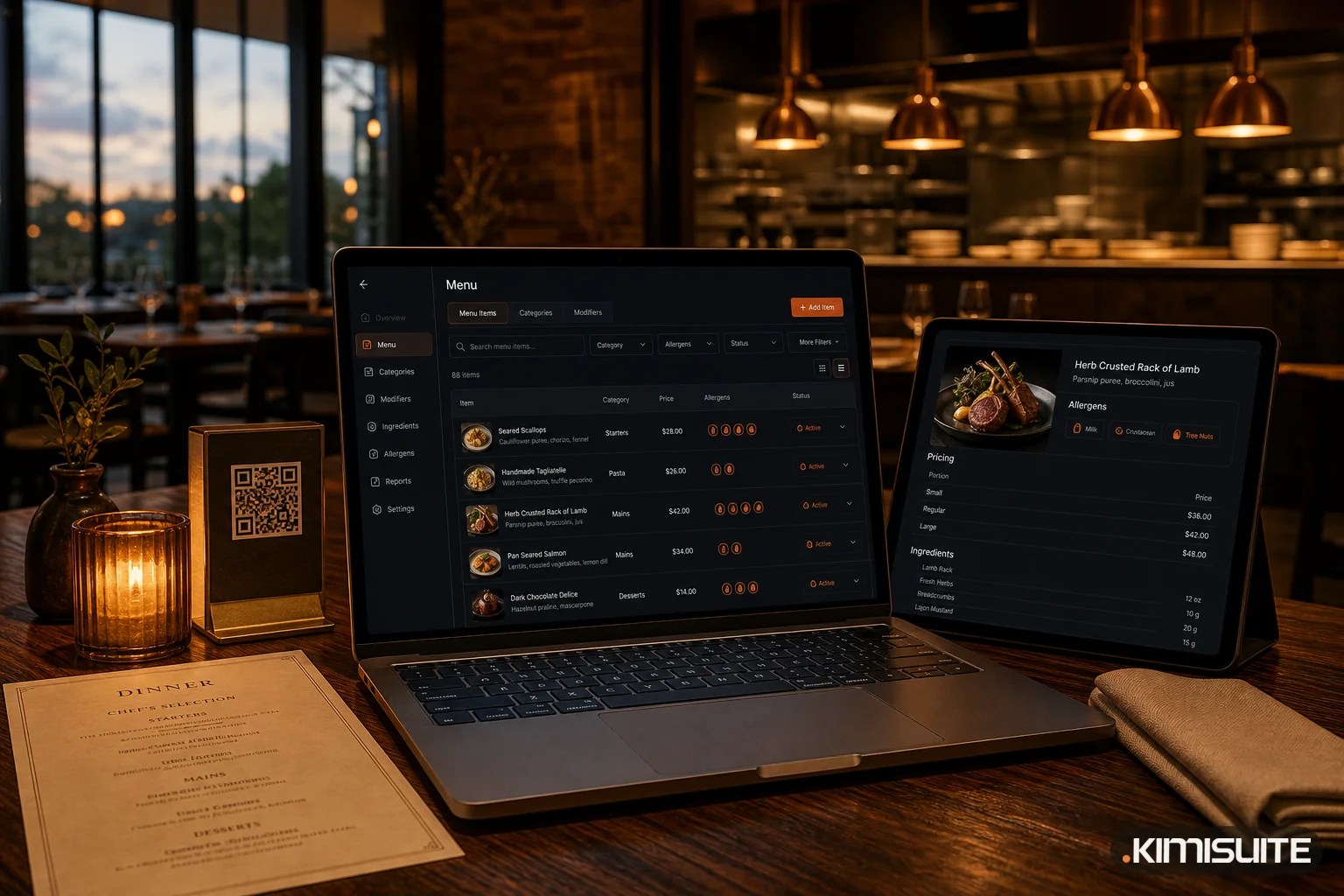
So the work is not switching the feature on. The work is completing the dish data underneath it: real descriptions, allergens declared per item, food types set where they apply. The AI writing and translation tools make that considerably faster than it used to be, but somebody still has to know what is in the food.
That is not a downside. A menu with complete allergen data is better regardless of whether an assistant reads it — it makes the printed card better, the digital menu better and the staff better informed.
What it tells you back
There is a second effect that restaurants tend not to anticipate.
The conversations are stored, and reading them is the closest thing to overhearing what guests actually want. Which dishes get asked about. What people look for and do not find. Which descriptions are unclear enough that guests have to ask what a dish is.
None of that reaches you otherwise. Guests do not flag down a manager to report that a menu description was confusing. They just order the risotto instead, and you conclude the risotto is popular.
Where the line is
Smart Menu answers questions about the menu. It does not replace the kitchen, and it does not replace a conversation about a serious allergy — for a guest whose reaction is severe, talking to staff who can confirm how a dish is prepared tonight is still the right thing, and always will be.
What it removes is the volume of routine questions that never needed a human: what is vegetarian, what has no nuts, what goes with the fish, what is in this dish. Those are the ones that eat service time and get vague answers.
It also does not run your restaurant. Orders, kitchen tickets and payment belong to Gastro POS Hub. Smart Menu lives in the digital menu, on the guest's phone, where the question gets asked.
Worth checking tonight
Ask whoever is on the floor this evening which dishes on your menu contain nuts. Then check the answer against your declarations.
If they match, you have trained your team well. If they do not, the gap was never about effort — the information simply was not where the question was being asked. Restaurant Hub puts it there.