Peppol e-invoicing in Belgium means that invoices between Belgian VAT-registered businesses are sent as structured electronic invoices over the Peppol network, from the seller's software to the buyer's software, instead of as PDF or paper. According to the Belgian tax administration (FPS Finance), this has applied since January 1, 2026. For a small business, the practical question is not the law itself but what has to change in the way you invoice tomorrow.
This guide summarizes what the official sources say, what a small business has to set up, and the mistakes worth avoiding. It is a general explanation, not tax advice. All statements below were checked on the official site einvoice.belgium.be on October 27, 2026; rules and dates can change, so check there before you rely on them.
Who is covered
According to FPS Finance:
- Belgian enterprises liable to VAT must use structured electronic invoices with each other.
- If you only invoice private individuals, you do not have to send structured invoices to them, but you must be able to receive structured invoices from your own suppliers.
- The FAQ states that the obligation also applies to businesses using the small enterprises exemption scheme (annual turnover up to EUR 25,000) and to farmers under the special agricultural scheme, at least for receiving B2B invoices.
- VAT-registered businesses not established in Belgium and without a permanent establishment are not subject to the obligation, according to the same FAQ, which also notes that the law is still being amended on this point.
Source: FPS Finance FAQ, general questions on the B2B obligation, checked October 27, 2026.
What "structured" means, and what it does not
A PDF attached to an email is not a structured electronic invoice, even if it looks the same. A structured invoice is data that the buyer's software can read line by line. The FPS Finance FAQ explains that from January 1, 2026 the structured invoice is the only legally required invoice; you may still send a PDF or paper copy alongside it if you want, but you do not have to.
Peppol is the network that carries these invoices. Participants are expected to at least be able to receive the Peppol BIS document type, which is an application of the European standard EN 16931. You do not register on Peppol yourself: you connect through a certified Peppol service provider, in practice usually through your invoicing or accounting software. For the general background, read What Is Peppol? E-Invoicing Across Borders, Explained.
The grace period is over
FPS Finance announced a tolerance period for January to March 2026: no penalties for offenses specific to the new obligation, provided the business had taken timely and reasonable steps and still met its invoicing duties in another way. The administration stated clearly that this was not a general postponement. Source: tolerance during the first three months of 2026, checked October 27, 2026. The tolerance covered those three months only, so since April 2026 the normal rules apply.
What a small business has to set up
- Check your invoicing tool. Ask whether it can send and receive structured invoices over Peppol, and through which service provider.
- Make sure you are reachable. In Belgium, Peppol IDs are based on the enterprise number from the Crossroads Bank for Enterprises (scheme 0208). Your provider registers you; check that your enterprise number appears in the Peppol directory.
- Clean up your customer data. Correct VAT numbers and enterprise numbers for every business customer. The invoice is delivered to the identifier, so a typo means no delivery.
- Know who can receive. FPS Finance points to Lookup Peppol, where you search by company name or by
0208:plus the enterprise number. It shows who can receive documents via Peppol, not who can send them. The Peppol Directory lists registered recipients as well. - Agree a fallback. If a customer is not yet able to receive via Peppol, the FAQ says you may use another method, provided the customer agrees to it for electronic invoices and it is secure.
- Watch the next step. The FAQ mentions e-reporting of invoice data to the administration as planned for 2028 in the federal coalition agreement, not yet transposed into law when checked.
How to look up an identifier in practice is explained step by step in How to Check a Peppol ID Before You Send an E-Invoice.
Common mistakes
- Asking every customer for their Peppol ID. The FAQ says you should not need to: in Belgium you can deliver to the enterprise number by default.
- Sending a PDF and calling it done. Between Belgian VAT-registered businesses, the PDF is at most a courtesy copy.
- Sending attachments by email separately. According to the FAQ, attachments are legally part of the invoice and must travel through the same channel. Sending them separately is not allowed.
- Forgetting incoming invoices. Receiving matters as much as sending, including for businesses that only sell to consumers.
Sending Peppol invoices from CRM Business Hub
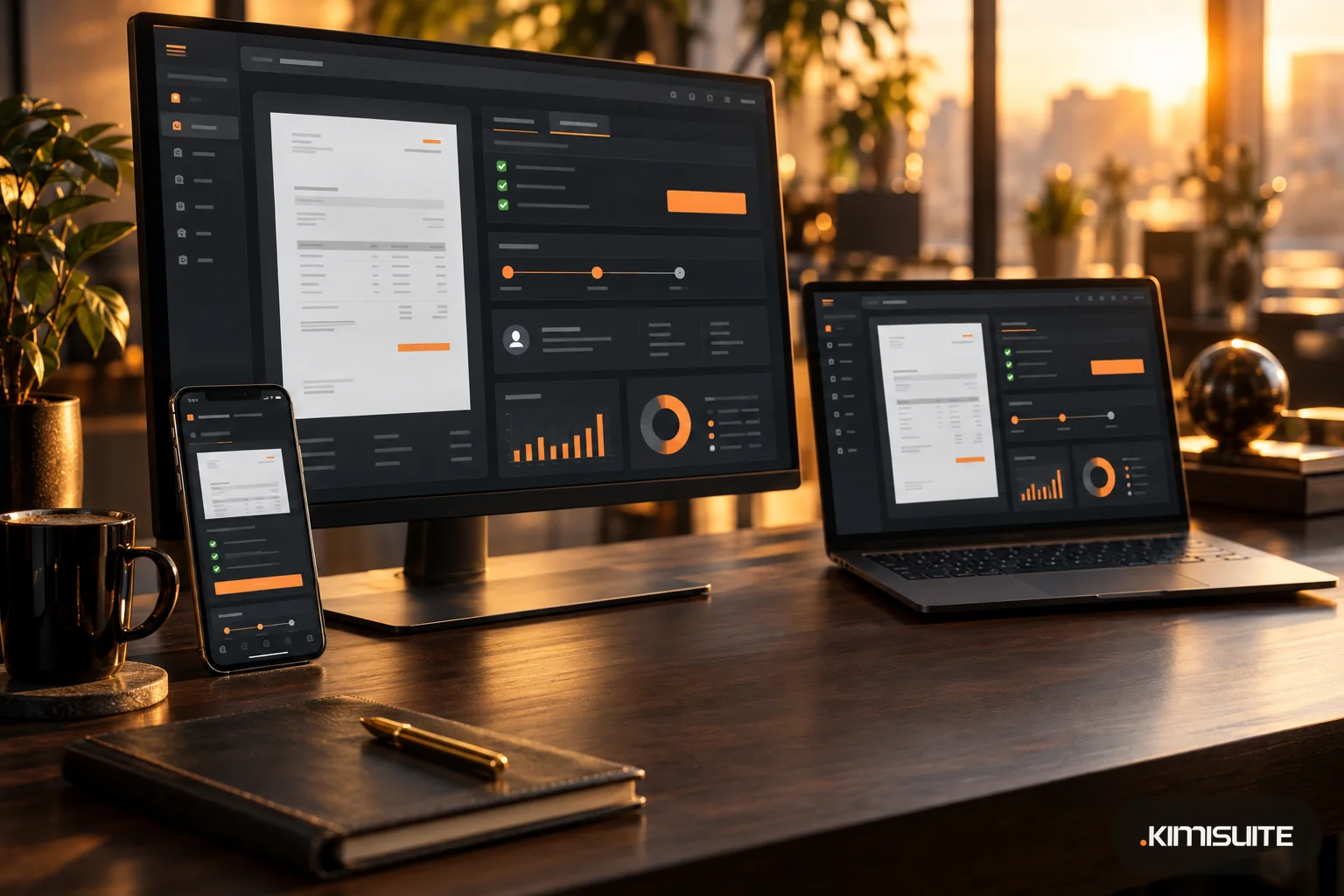
CRM Business Hub is the invoicing and customer app in the KIMISUITE workspace. Its e-invoicing features cover the sending side:
- You connect your workspace once under Settings, e-Invoicing, with your country, electronic address and VAT ID.
- On the customer record you store the Peppol ID and scheme, including 0208 for the Belgian enterprise number, and check it with the Check button.
- From the e-Invoice tab of an invoice or credit note you send it via the Peppol network in Peppol BIS Billing 3.0, after a readiness check of the required fields.
- Each document then shows its status: queued, sending, delivered or failed, with status messages.
- The number of Peppol documents per month depends on your plan, with extra packs available.
Receiving is an obligation of its own in Belgium. Check that your enterprise number is registered to receive with a Peppol service provider, and ask how incoming invoices reach your bookkeeping. What the rules require for your business depends on your situation; when in doubt, ask your accountant.
FAQ
Is Peppol e-invoicing in Belgium mandatory for small businesses?
According to FPS Finance, it applies between Belgian VAT-registered businesses since January 1, 2026, and businesses under the small enterprises exemption scheme are covered at least for receiving. Check einvoice.belgium.be for your case.
Is a PDF invoice still valid between Belgian businesses?
According to the FPS Finance FAQ, the structured electronic invoice is the only legally required invoice. A PDF can be sent in addition.
Do I need to ask my customers for their Peppol ID?
No. FPS Finance says you should not need to: in Belgium you can deliver to the enterprise number with scheme 0208 by default. You can check a customer in Lookup Peppol.
How do I register my company on Peppol?
Through a certified Peppol service provider, usually via your invoicing or accounting software. You cannot register directly.