Most hotels invest real time and money into their website. Whether it actually moves guests to book direct, though, is rarely checked in any structured way. So weak spots can sit there for months — quietly handing reservations, and the commission that comes with them, to the OTAs.
The fix usually isn't a redesign. It's a short, honest audit. Here is the test we run on a hotel website, and the five places direct bookings tend to leak.
1. The booking option a guest can't find
A guest who wants to book direct often can't work out how. There is no obvious "Check availability", or it hides below the fold, or it opens a clunky third-party page. On the OTA, booking is one confident tap — so that is where they go.
The check: land on your homepage on a phone and try to book a room in under ten seconds. If you hesitate, so does your guest.
2. Too many steps
Every extra field, page and redirect loses people. OTAs have spent years removing friction from the booking flow; a hotel engine that asks for an account, reloads twice and hides the price until step four cannot compete.
3. It breaks on a phone
The majority of hotel research now happens on mobile. If your booking flow is fiddly on a small screen — tiny date pickers, horizontal scrolling, a form that zooms — the reservation quietly moves to Booking.com, where the mobile experience just works.
4. No reason to book direct
If the rate and the perks are identical to the OTA, a rational guest books on the channel they already trust. Direct needs a visible advantage: a best-rate promise, a small perk, free cancellation, a loyalty touch. No advantage, no direct booking.
5. The booking that goes nowhere
This is the expensive, invisible one. A direct booking that lands in an email inbox — not in your property management, your guest profile, your invoicing — creates manual work and throws away the very thing that makes direct valuable: the guest relationship and the data. A reservation should become something in your business, not sit in an inbox.
What a booking-ready website looks like
- An instant, obvious booking engine on your own domain — not a redirect to someone else's.
- Mobile-first, with as few steps as an OTA.
- A clear, honest reason to book direct.
- Every reservation connected to your operations and the guest's profile.
Where KIMISUITE fits
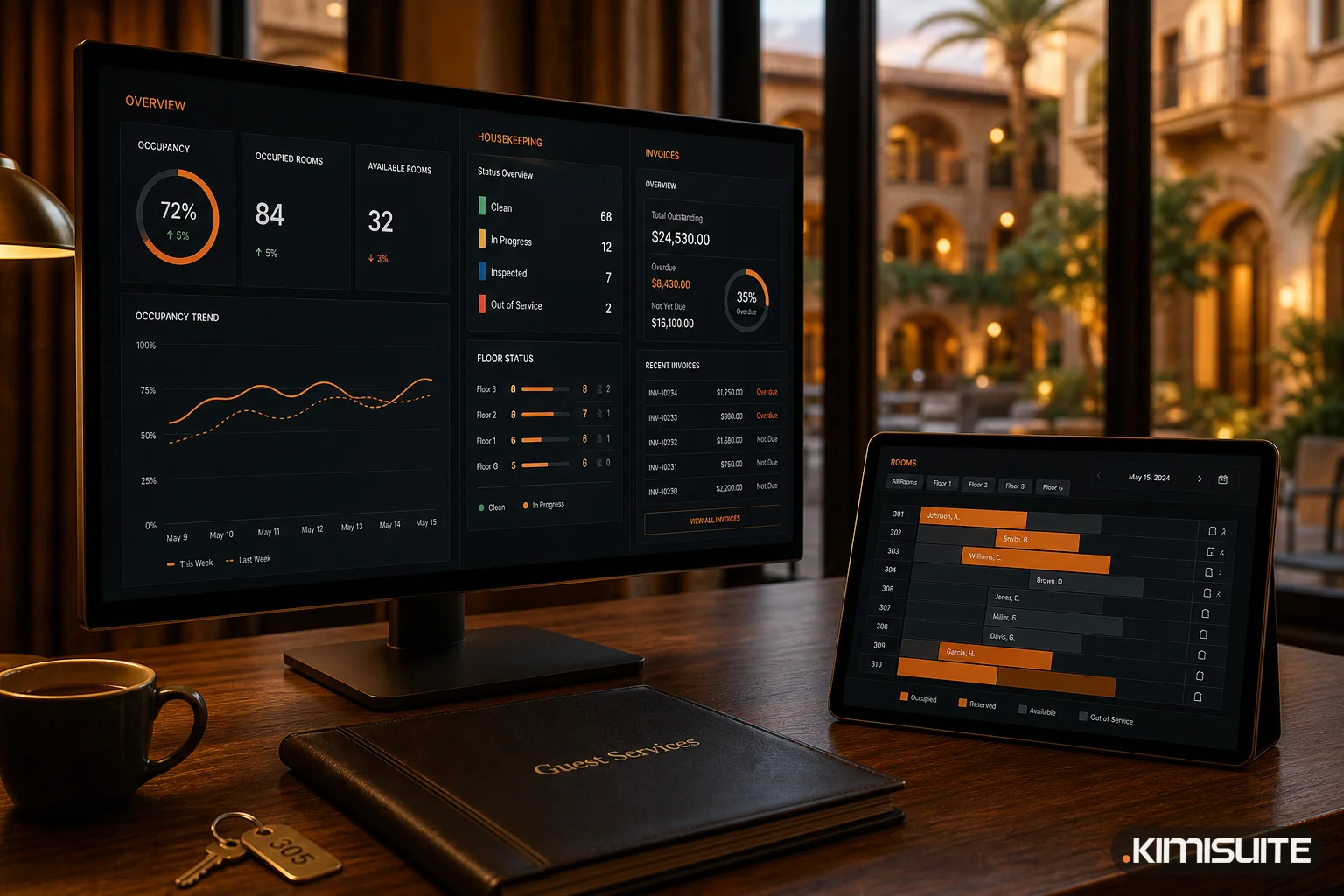
KIMISUITE Booking Hub puts a real booking engine on your own hotel website, so a direct booking stays direct — with no OTA commission taken out of it. And because it lives inside the KIMISUITE workspace, a reservation doesn't stop at "confirmed": it becomes a CRM guest, feeds your invoicing and reporting, and gives you the data to bring that guest back next season. You keep the margin and the relationship.
You don't need to rebuild your website to start. You just need to run the test — and fix the leaks it finds.
See how Booking Hub works — or audit your own booking flow first.