The mandatory start of e-Faktura (е-Фактура) in North Macedonia on 1 October 2026 has been postponed: a draft Law on Electronic Invoicing proposes that 1 October 2026 becomes the start of voluntary use, with mandatory e-invoicing for VAT payers from 1 April 2027, but that new date is not final until the law is adopted.
For months, 1 October 2026 was the date circled on calendars across the country. If you were preparing for it, this article sums up what has changed, what is still open, and why the extra time is best used now rather than in March.
What has changed
The Public Revenue Office (UJP, Управа за јавни приходи) announced on its official e-Faktura portal that the draft law on e-Faktura has been published on ENER, the national electronic register of regulations, and opened for public consultation. Businesses, chambers, accountants and software companies were invited to comment.
According to reports on the published draft, the proposed schedule is:
| Proposed date | Who | What |
|---|---|---|
| 1 October 2026 | Any business that wants to | Voluntary use of e-Faktura |
| 1 April 2027 | VAT payers | Mandatory issuing and receiving of e-invoices |
| 1 July 2027 | Legal entities not registered for VAT that carry out economic activity | Mandatory |
| 1 October 2027 | Budget users, public institutions, state-funded non-profits, the National Bank | Mandatory |
| 1 January 2028 | All remaining entities | Mandatory |
Reports also state that transactions documented with a fiscal receipt and certain VAT-exempt banking and financial services fall outside the scope.
What is still open
The important word is draft. The schedule above becomes binding only when the Assembly adopts the law and it is published in the Official Gazette. Until then:
- 1 October 2026 is no longer the mandatory date. Nobody should expect a hard switch on that day.
- 1 April 2027 is under discussion, not confirmed. It is the date in the draft, and it can still move during the legislative process.
- Details can still change, including who is in which phase and the technical requirements.
The only reliable guidance comes from UJP itself. UJP has explicitly asked businesses to follow only its official instructions, and the technical documentation lives on the official e-Faktura wiki at efakturawiki.ujp.gov.mk.
What does not change
The reason for e-Faktura has not moved. UJP describes the system as registering each invoice in real time in a central electronic system, which makes an e-invoice both a commercial document and a tax document. For a business that means:
- invoices become structured data, not a PDF or a printout
- they are digitally signed and pass through UJP's system
- master data has to be clean: EDB, legal names, addresses and VAT status of your customers
- errors surface immediately instead of at the end of the month
Whether this starts in October 2026 or April 2027, the work inside your business is the same.
Why to get ready now anyway
A postponement feels like relief. In practice, it mainly moves the rush. If the date lands on 1 April 2027, a large share of VAT payers will look for a solution in February and March, along with the accountants who serve them.
There are three concrete reasons to use the autumn instead:
1. Voluntary use is a real test run. If the draft is adopted as proposed, you can issue e-invoices voluntarily from 1 October 2026. A rejected invoice is a minor issue during a voluntary phase and a real problem during a mandatory one.
2. Data cleaning takes longer than expected. Take a small business with 150 active customers. If 10 to 20 records have a missing or wrong EDB, a duplicate or an old address, at 10 minutes per record that is two to three hours of work, provided someone knows the correct data. If you have to ask the customer, it takes weeks.
3. The digital certificate needs lead time. UJP's own steps for joining testing include registering a valid digital certificate on the test platform and submitting digitally signed test e-invoices. If your company does not yet have a suitable certificate, ordering one belongs on the list now, not in the last week.
A practical checklist for the autumn
- Read the official sources. UJP's e-Faktura wiki and the draft law on ENER. Ignore summaries that still say "mandatory from 1 October".
- Decide how you will issue. Through your invoicing software's connection to UJP, or through UJP's own web application. For more than a handful of invoices a month, the software route saves time.
- Clean your customer list. EDB, legal name and address for every customer you invoice.
- Check the certificate. Who in the company signs, and with which certificate?
- Talk to your accountant. Agree how e-invoices will reach them and how rejected invoices get corrected.
- Plan the switch. If you change systems, do it at the start of a month, with a short overlap. The steps are in our guide on how to switch invoicing systems without losing a single customer record.
Where KIMISUITE fits
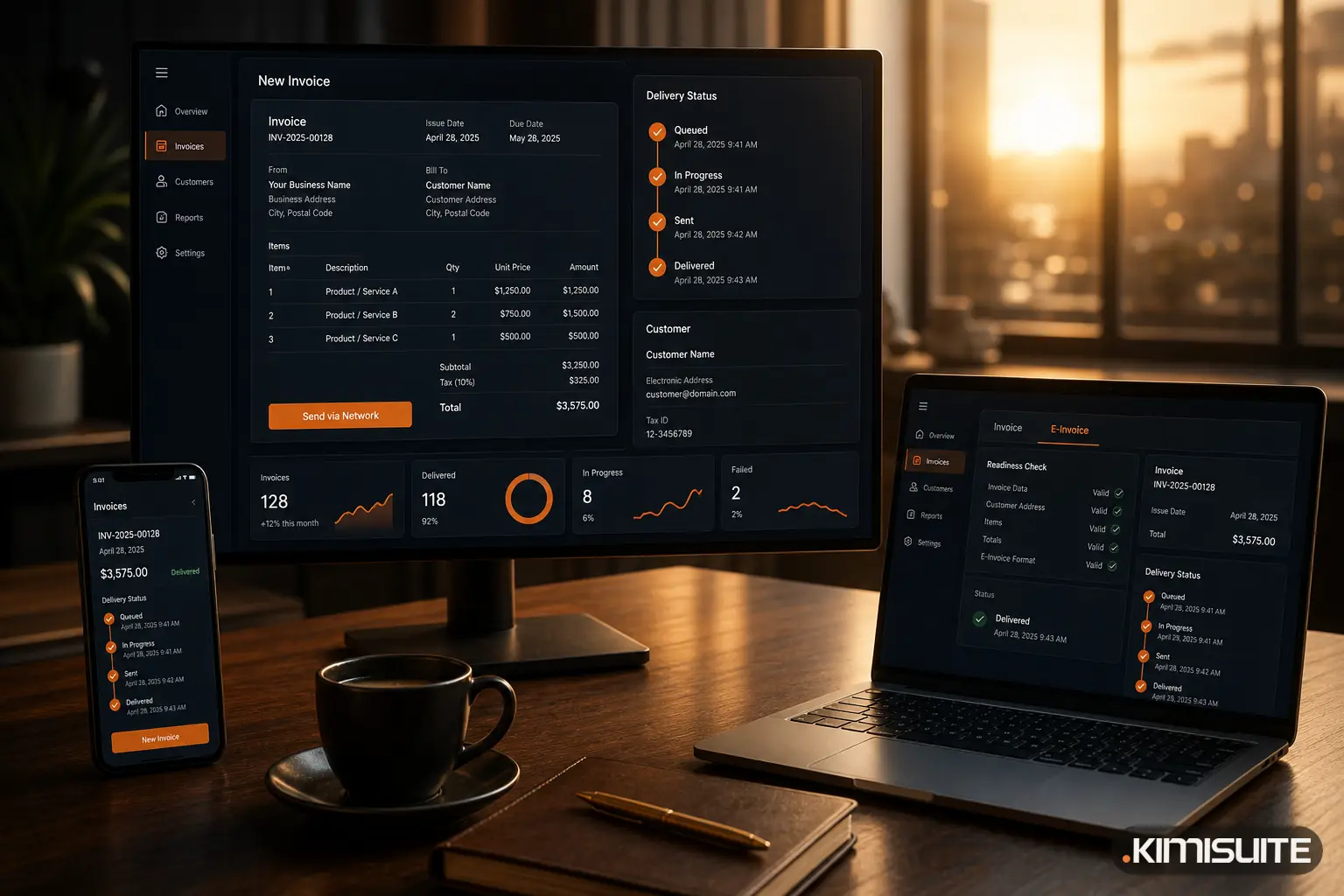
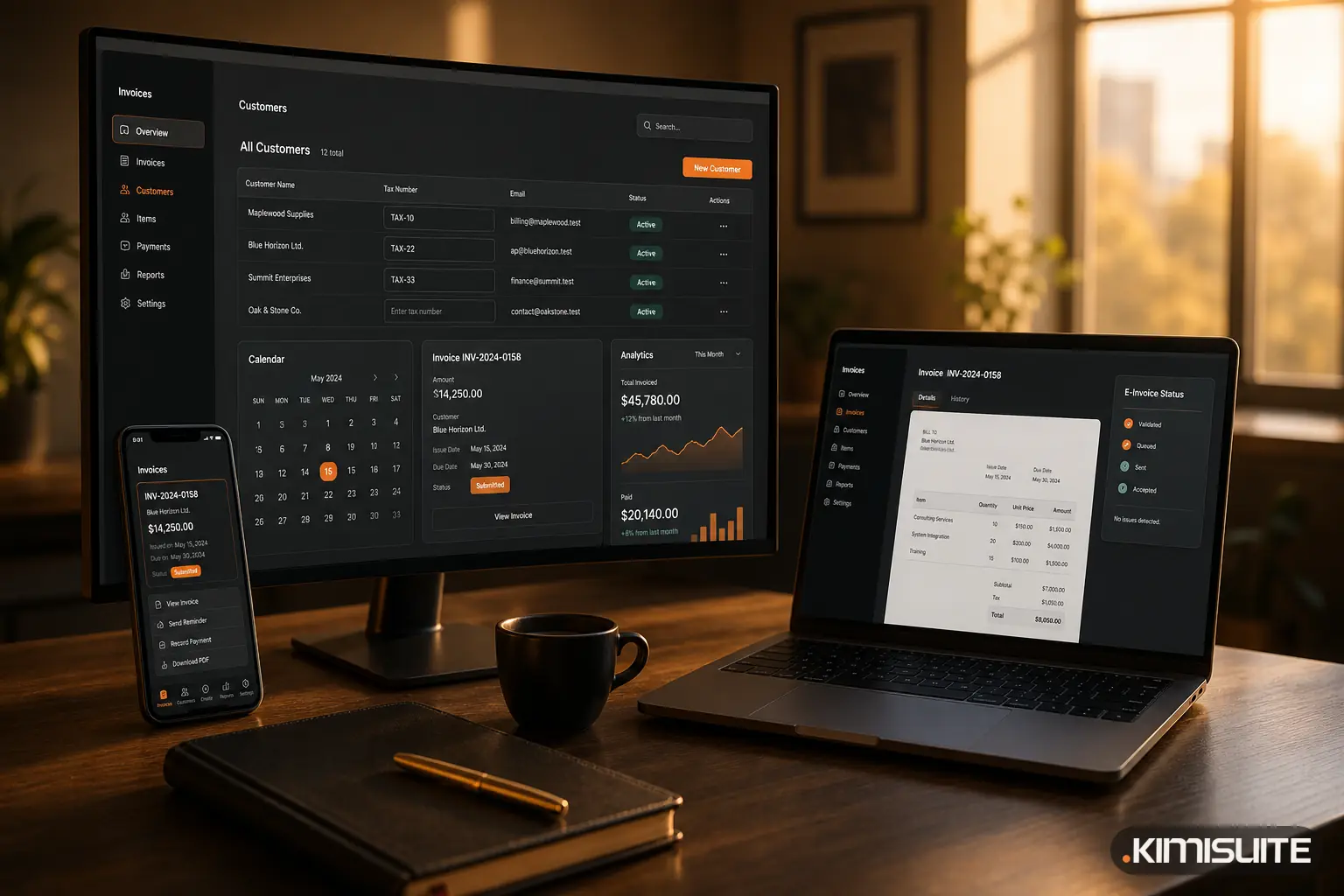
e-Faktura (UJP) is integrated in CRM Business Hub, and it is ready now, regardless of when the obligation starts. You create invoices from the same customer records you use for quotes and payments, so the data e-Faktura needs is already in one place. Whether the mandatory date ends up being 1 April 2027 or another day, you can start today and use the voluntary phase to get used to it.
We will update this article as soon as the law is adopted and the dates are final.
Cancel anytime · No minimum term · 14 days free
This article reflects the situation as of 22 September 2026 and is not tax advice.