If you've ever tried to scale a small or mid-sized business in 2026, you already know the dirty secret of modern SaaS: you don't pay for software anymore — you pay for the pain of stitching software together.
A CRM for leads. A booking tool for appointments. A POS for the till. A separate payment processor. An invoicing app. A WhatsApp tool. A separate HR app for time tracking. A website builder. A standalone task manager. A spreadsheet that does everything those nine tools couldn't agree on.
Twelve logins. Twelve subscriptions. Twelve places your data goes to die.
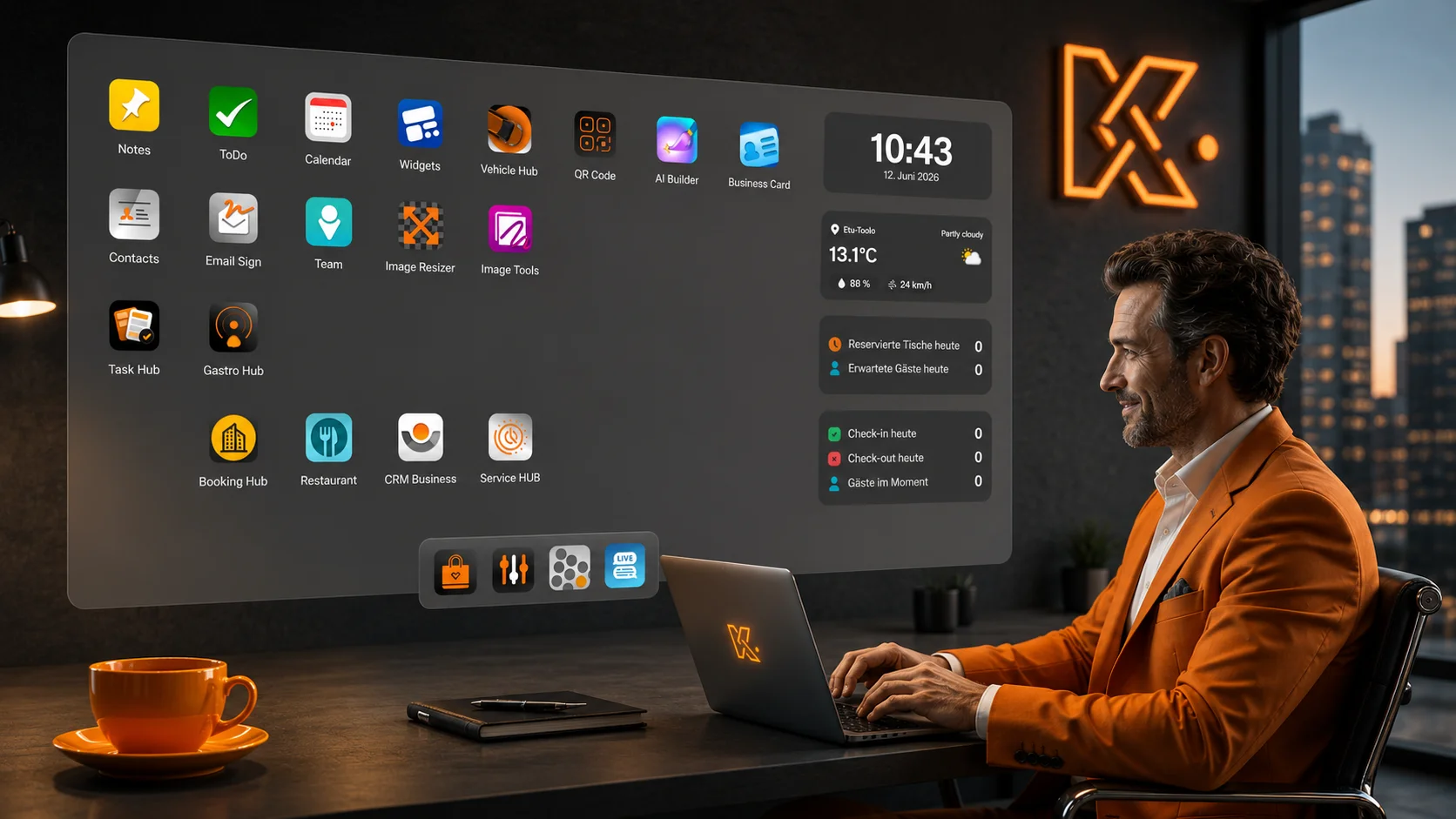
KIMISUITE was built to end that. Not as another CRM. Not as another "all-in-one marketing suite." But as a true AI-powered business operating system — the layer that runs every department of your company from a single workspace, with AI built into every app instead of bolted on as a separate add-on subscription.
This article is for owners, operators, and team leads who are tired of being software project managers and want to get back to running the business.
What does "Business Operating System" actually mean?
The phrase gets thrown around a lot. Let's pin it down.
A business operating system (BOS) is a single platform that handles:
- Front office — leads, CRM, sales pipelines, proposals
- Operations — bookings, calendars, POS, dispatch, inventory
- Back office — invoicing, payments, expenses, HR, payroll
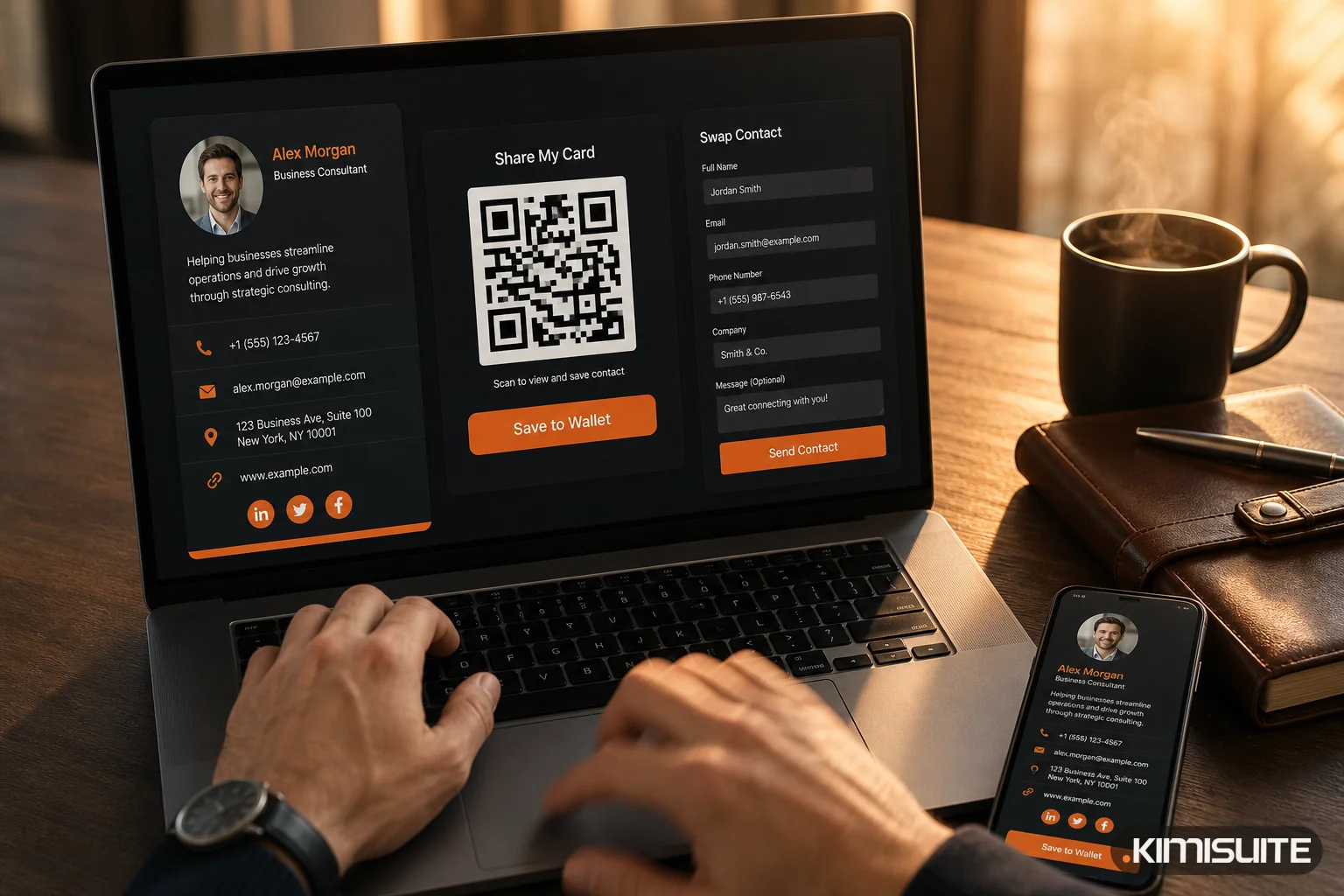
- Customer experience — websites, widgets, email signatures, WhatsApp, loyalty
- Insights — reports, KPIs, AI forecasting
…all connected to the same customer record, the same billing source, and the same login.
When all of that lives under one roof, two things happen that change how the business runs:
- No more data islands. A booking made on your website lands in the CRM, opens an invoice, ticks down inventory, and adds the customer to your loyalty programme — automatically.
- Real AI gets real context. AI is only as useful as the data it can see. When the AI has access to your last 30 days of bookings, your inventory, your support tickets and your team's calendar, it can actually help you make decisions. Bolt-on AI plugins can't do that because they only see the silo they live in.
Why "AI-powered" matters in 2026
Three years ago, "AI-powered" was a sticker that vendors slapped on a landing page so they could raise a Series B. Today, AI is the difference between a tool you click through and a tool that does work for you.
Inside KIMISUITE, AI shows up in places that change outcomes for the operator:
- Sales forecasting. Your POS and booking data feed a model that projects next week's revenue, so the head chef knows whether to prep ahead and the GM knows whether to roster a fourth waiter.
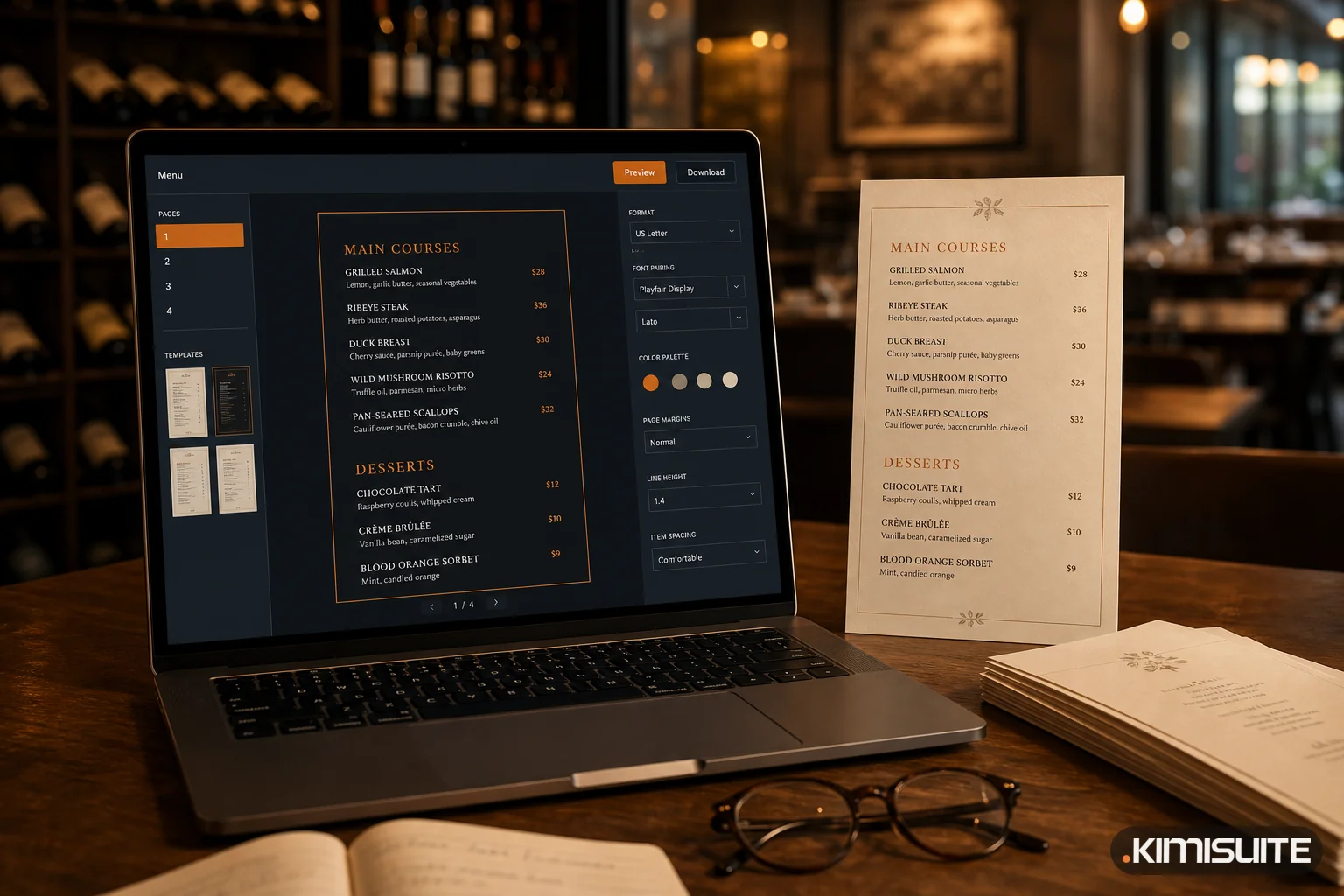
- Smart menu and product descriptions. Type a dish or a product name, get a customer-facing description in your tone, in any of the 16 supported languages.
- Auto-categorisation. Incoming tasks, emails and tickets are routed to the right person automatically, with priority scored from history.
- AI Website Builder. A working multi-page site, generated from a brief, with branding consistent across every page you create later.
- Cross-app summaries. A daily digest that pulls signal from CRM, bookings, inventory and reports into one screen. No one has to "check 8 tabs" anymore.
None of that is magic. It's just what happens when an operating system can see all of your data at once.
How this compares to platforms like GoHighLevel
Most operators looking for an all-in-one platform end up reading about GoHighLevel at some point. It's a useful reference: GoHighLevel showed the market that small businesses don't want eleven SaaS apps, they want one suite. The category exists in part because of them.
KIMISUITE takes that "one suite, not eleven" philosophy and pushes it further in three concrete ways:
1. Built for operators, not just agencies. GoHighLevel is shaped around US marketing agencies that resell SaaS to their clients. KIMISUITE is shaped around the actual businesses doing the work — hotels, restaurants, dealerships, salons, clinics, real-estate offices, service trades. The apps reflect that: a real Hotel Booking Hub, a real Gastro POS Hub, a real Vehicle Hub, a real Service Manager with bookings and SLAs. Not just funnels.
2. European-first. 16 languages out of the box, EU compliance baked in, GDPR-friendly defaults, multi-currency that respects the country the visitor is in. If you're a European SMB, you don't have to bend your processes around a US-shaped tool.
3. One bill, one card on file — including the frontline apps. Adding the POS to your workspace adds it to your existing KIMISUITE subscription. No separate per-terminal SaaS, no card-machine subscription somewhere else. The price you see is the price you pay.
If you're researching GoHighLevel alternatives because you need more than CRM and funnels — you want the booking engine, the POS, the HR module, the website builder and the AI in the same login — KIMISUITE is the answer that grows with you instead of forcing you to bolt on another vendor for every new department.
The "8 tools you can finally cancel" effect
Walk into a typical 20-person business and you'll find:
| What they have today | Replace with |
|---|---|
| HubSpot or Pipedrive | KIMISUITE CRM Hub |
| Calendly or Doodle | KIMISUITE Service Manager |
| Mailchimp or ActiveCampaign | KIMISUITE Campaigns + Email Signature |
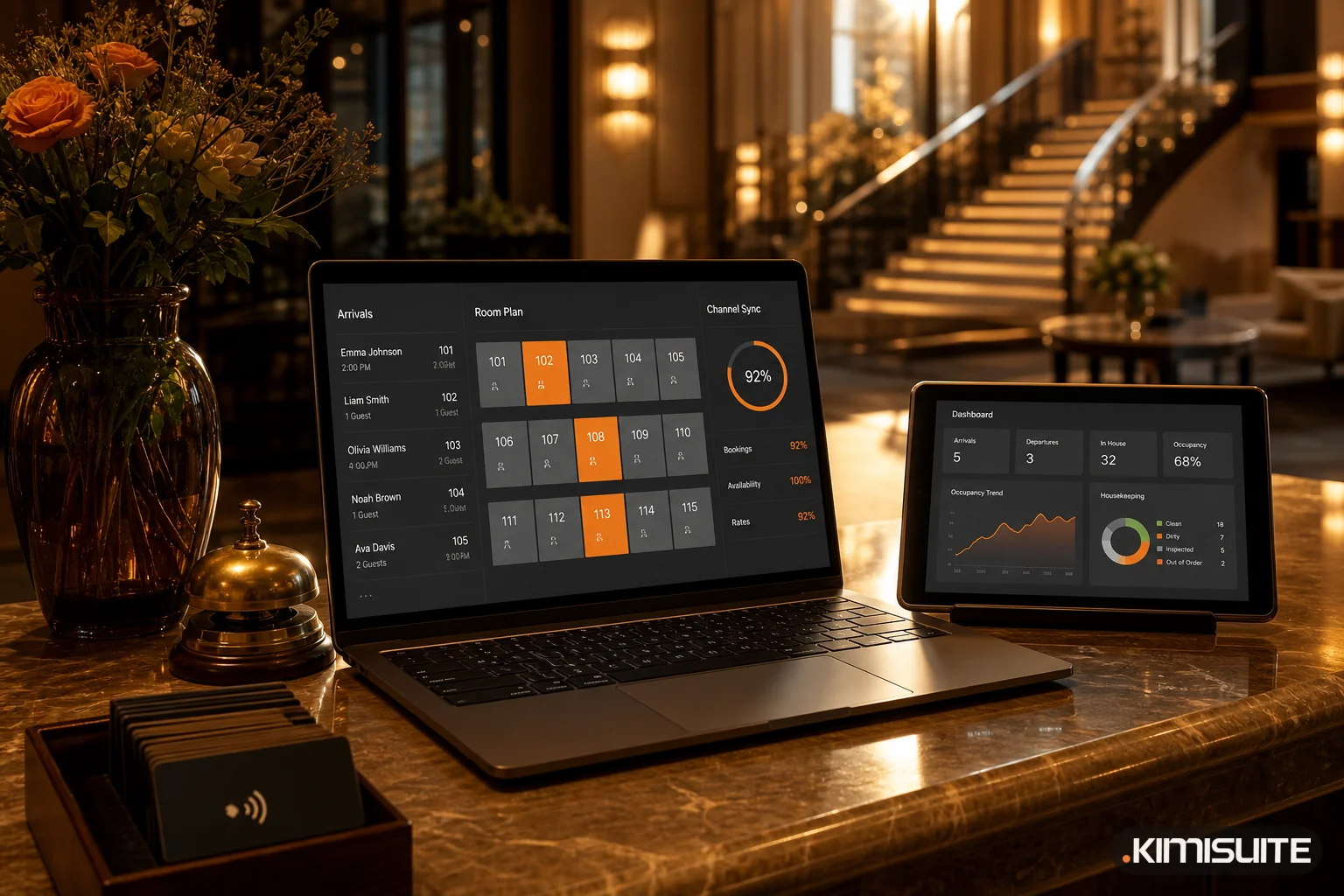
| Acuity / Booking.com extranet | KIMISUITE Booking Hub |
| Toast / Square / Lightspeed | KIMISUITE Gastro POS Hub |
| BambooHR / Personio (light) | KIMISUITE HR Hub |
| Asana / Monday | KIMISUITE Task Hub |
| Squarespace / WordPress | KIMISUITE AI Website Builder |
That's not a wish list — those are apps shipped today, sharing one customer database, one billing source, one identity layer.
Across our customer base, replacing the average 8-tool stack with KIMISUITE saves 40–60% on software spend and removes the entire category of "why doesn't tool A know about tool B" support tickets that eat the COO's week.
Growth, in practice — not theory
A BOS doesn't grow the business by itself. But here is the difference it makes when growth gets serious:
Adding a second location? In a stitched-together stack, you onboard your new branch onto 8 different vendors, each with its own setup, each with its own billing change. In KIMISUITE you flip a switch — the second branch shares the same loyalty pool, the same CRM, the same staff identity, the same accounting flow.
Hiring a fifth waiter, a third sales rep, a new property manager? Single SSO. They show up in the right modules with the right permissions on day one.
Going multilingual to grab the next market? The platform already ships in 16 languages. Your menu, your website, your invoices, your reservation confirmations — all already translated, with AI helping you fill any gaps.
Adding a new revenue stream? Want to add a small e-commerce side to your service business? Switch on the relevant app from the App Store. Want to add WhatsApp Automation to the booking flow? Same store, same bill, live in seconds.
That's not marketing theory. That's how an operating system behaves.
The KIMISUITE difference, summarised
If you remember nothing else from this article, remember this:
- CRM is a feature, not a platform. Modern growth needs everything the CRM touches — bookings, POS, payments, HR, website, support — under one identity and one bill.
- AI matters when it has data. Bolt-on AI on a siloed CRM is mostly a parlour trick. AI inside a true business OS forecasts, summarises and decides because it can see the whole company.
- Operators, not agencies, are the unit of growth in Europe. A platform shaped around US marketing agencies will always feel slightly off if you actually run a hotel, a restaurant, a dealership or a clinic. KIMISUITE is built for the people doing the work, not the people reselling the SaaS.
If you're considering a switch — from a stack of separate tools, from a vertical SaaS that's outgrown its category, or from a GoHighLevel-style suite that feels too marketing-heavy for your real business — start with a 14-day free trial. No card needed. Add the modules that match your operation, leave the ones you don't. Cancel anytime.
The point of an operating system is that it adapts to your business. Not the other way around.