 Part of HRM Hub
Shift Planning
Templates, recurrence and a coverage matrix that turns red before Friday does.
A shift template is a reusable definition: a workplace, a start and end time — overnight handled — a break length and, optionally, the position the shift requires. A recurrence rule takes that template and repeats it on a pattern you build from weekday chips with a live preview, over a date range, for a named employee or for nobody in particular.
A job materialises shifts into a rolling eight-week window and is idempotent, so running it twice creates nothing extra. Editing a rule regenerates future shifts and leaves past ones alone, because those are history.
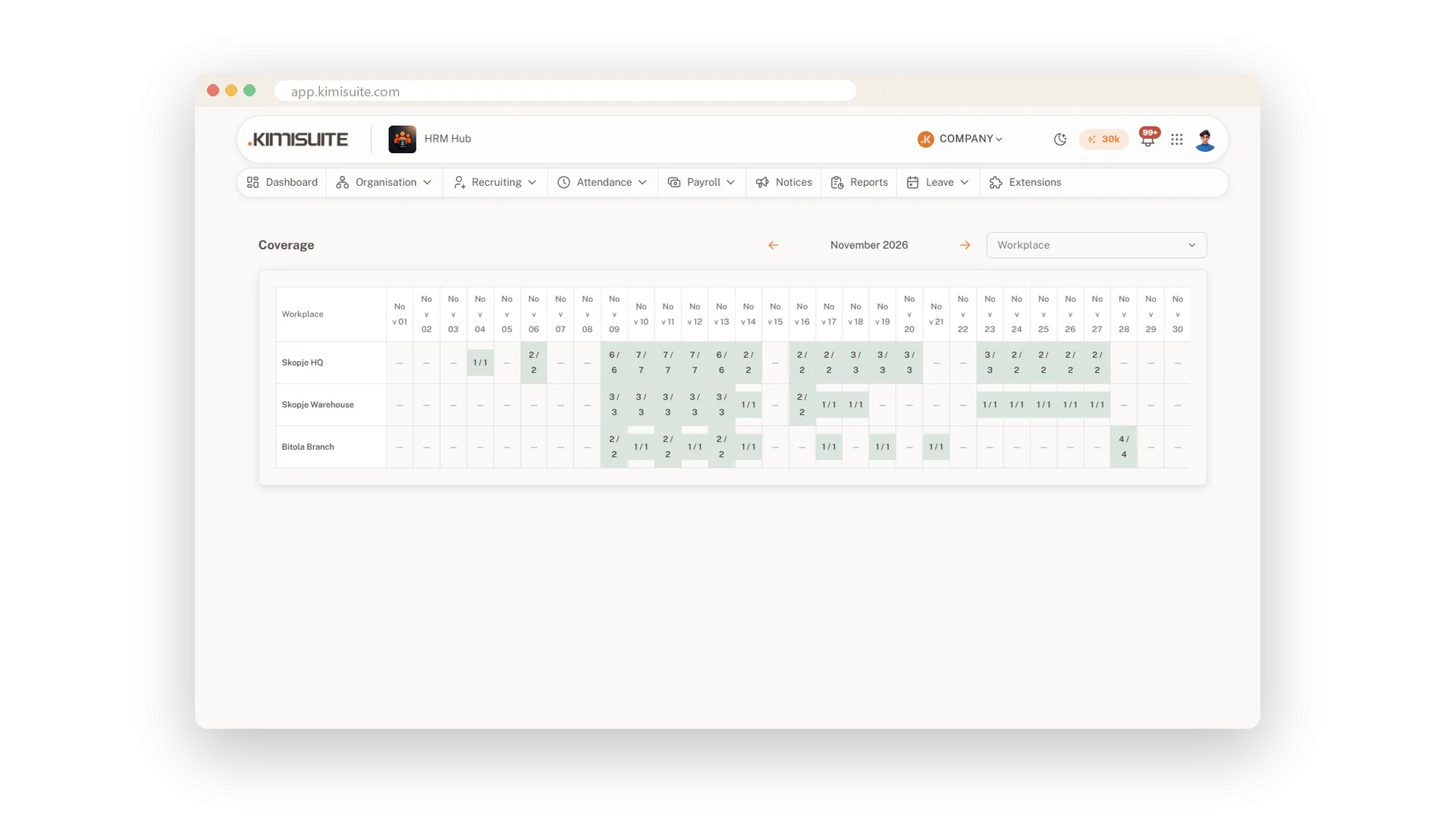
The week grid puts employees on rows and days on columns with draggable chips; the month grid is for planning at altitude. Over both sits the coverage report — a workplace-by-day matrix of assigned against required headcount per position, green when staffed, orange when short, red when nobody is on at all, and clickable straight into the day it is complaining about.
Key Benefits
Reusable templates with workplace, times, break and position
Recurrence rules built from weekday chips with a live preview
Shifts generated eight weeks ahead, without duplicates
Unassigned shifts wait on their own Open shifts row
Week and month calendars, filtered by workplace
Coverage matrix with per-day, per-position required headcount
Use Cases
A rota that repeats
Morning and evening templates on a weekly pattern. The next eight weeks generate themselves; you only touch the exceptions.
Friday night is short
The coverage cell turns orange days ahead, so you fill the gap while there is still time, not with a phone call on Friday afternoon.
Seasonal ramp-up
Required headcount is set per workplace and day, so the summer terrace can need four servers where the winter dining room needs two.
FAQ
Try HRM Hub today
One source of truth for everyone who works for you.
14 days free, cancel anytime, no minimum term.