There are two kinds of professional web design in the market, and most business owners cannot tell them apart until the site has been live for a year and the analytics have stopped lying.
The first kind is designed to win awards. The second is designed to win customers. They look nearly identical in the pitch deck. They diverge sharply in production, and violently after launch.
The question
Before you hire anyone to design your website, ask this: "What is the specific business outcome this website has to produce, and how will we measure whether it did?"
If the designer's answer starts with adjectives — modern, clean, premium, bold — you are being sold a portfolio piece. If it starts with a number — bookings per month, contact requests per week, average order value, cost per lead — you are being sold a conversion asset.
Both can be legitimate. But most small businesses do not need an award-winning website. They need a website that turns real traffic into real revenue, and if the design engagement does not start with that outcome, the design will not produce it.
Why "modern and clean" is the wrong brief
"Modern and clean" is the brief every designer secretly loves and every business owner secretly regrets. It looks like a clear direction. It is actually a blank cheque for aesthetic decisions made without reference to your users.
Real briefs sound different:
- "The site has to book more direct reservations than the current one, measured against last year's OTA-vs-direct mix."
- "The site has to reduce the number of email enquiries that turn out to be from unqualified leads."
- "The site has to make prospects understand what we sell in the first thirty seconds so we stop wasting sales calls on tyre-kickers."
Each of these produces a completely different set of design decisions than "modern and clean." The hero section changes. The navigation changes. The forms change. Even the typography changes.
What a conversion-focused engagement looks like
A web design engagement that takes the business outcome seriously runs in a specific order:
- Analytics review first, design second. The team looks at where current visitors drop off, what they search for, what they clicked instead of what you wanted them to click. That data drives the wireframe.
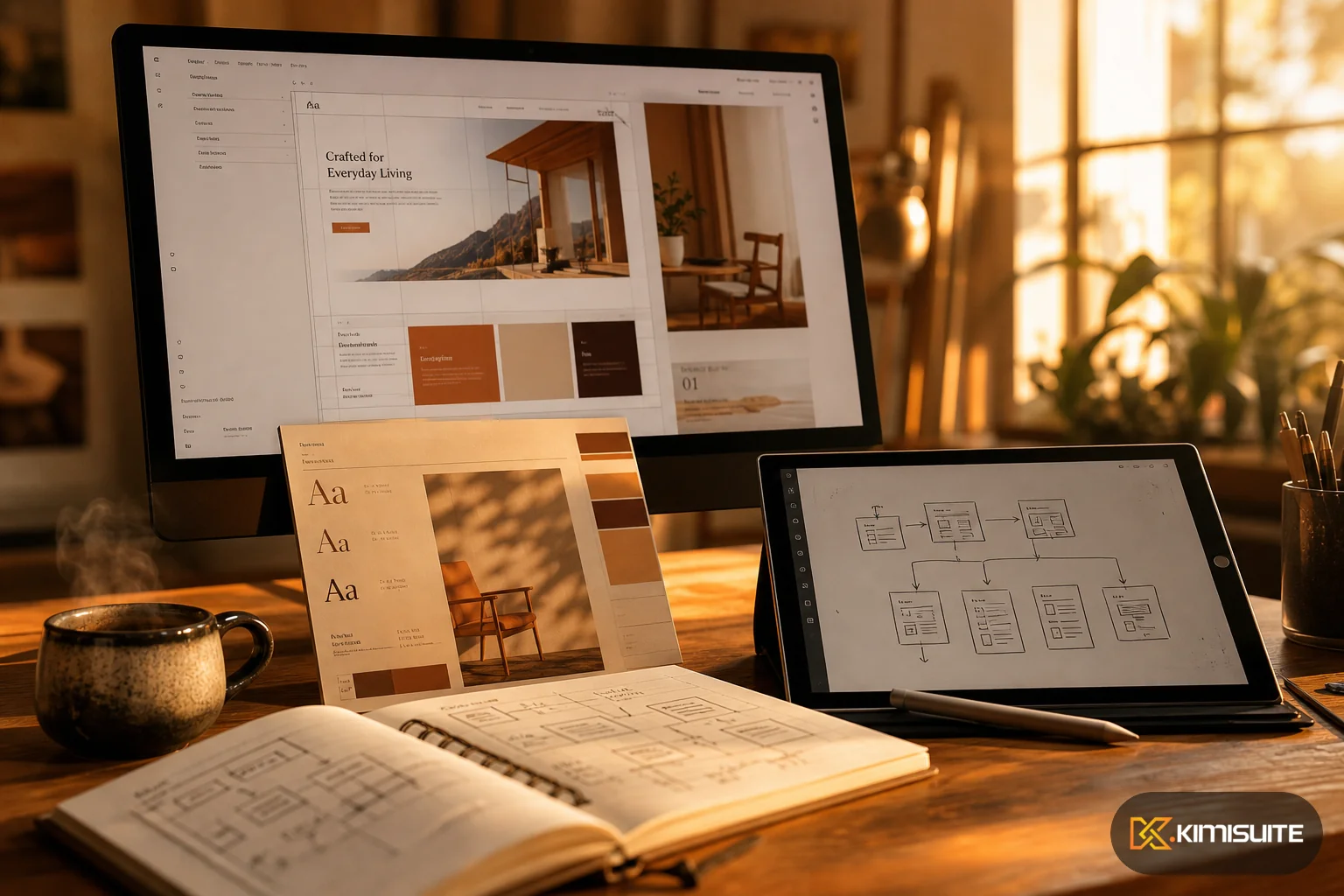
- Content structure before visual style. The site is designed as a decision journey — from the first-thirty-seconds question to the moment the user takes action — before anyone talks about colour palettes.
- One primary CTA per page. Every page has an obvious next step. If there are three equally-weighted buttons in the hero section, the design has already lost.
- Real content, not lorem ipsum. Actual product photography, actual testimonials, actual pricing (or an honest reason why pricing lives behind a form). Placeholder content produces placeholder-looking sites.
- Measurement infrastructure at launch. The site ships with the analytics events already wired, so month one can be evaluated against the brief.
Design work that skips any of these steps produces sites that look great in a case study and disappoint in production.
Where we sit
KIMISUITE's professional web design engagements start with the business outcome and end with a live site that reports its own performance. The design team works alongside the same engineers who build our SaaS products — which means the sites we ship are built on the same performance and accessibility standards we apply to our own platform. No handoff to a WordPress developer. No "we will add the tracking later." Every page is a decision surface, and every decision surface is measurable.
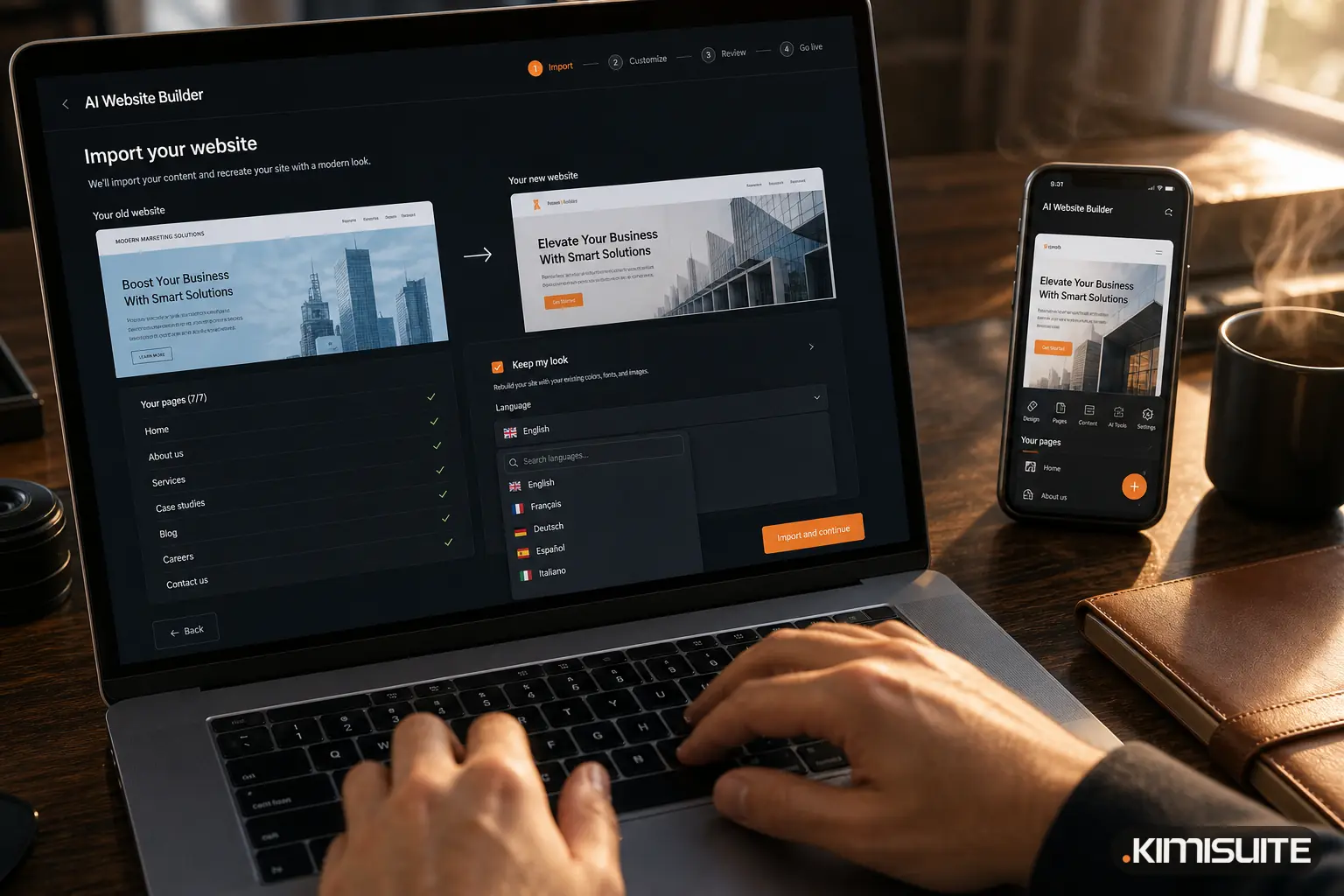
We also design for the reality that most sites need to work in more than one language. The multi-language handling is baked into the structure from the first wireframe, not retrofitted six months later.
Frequently asked questions
Do you work on WordPress or a custom platform?
Custom platform where the business needs it. WordPress where it does not. The decision is based on scale, integration needs, and long-term editing patterns — not on what is easier to sell.
Can you handle multi-language sites?
Yes. Most engagements ship in three to sixteen languages depending on the market. We handle translation, per-locale URLs, and hreflang correctly out of the box.
What if I already have a website?
Most of our engagements are redesigns rather than first-time builds. We start by auditing what is working and preserve it — the goal is not a shiny new site, it is a better-performing one.
Do you handle hosting?
Yes, via our managed hosting, included in the ongoing plan.
Bottom line
The web design question is not "what should my site look like?" — it is "what should my site do?" If the designer you are talking to cannot answer that question in your language, in numbers, you do not have a design partner. You have a portfolio candidate.